
Research
My research quantifies and reduces uncertainty in how aerosols and clouds interact within the Earth's climate system. I combine large-scale climate model experiments, satellite observations, and machine learning to work out where climate models get aerosol-cloud interactions wrong, why, and how to fix them, spanning model development (ECHAM6-HAM, ICON-HAM, UKESM1), perturbed-parameter ensembles, and Gaussian process / neural network emulation.
See my Google Scholar or ORCID record for the full citation record, or visit my Publications page for the complete list.
Research Interests
Aerosol-Cloud Interactions
Quantifying how aerosols influence cloud properties and Earth's radiation budget, and constraining the resulting uncertainty in climate projections.
Machine Learning Emulation
Develop and train Gaussian process emulators on large perturbed-parameter ensembles.
Satellite-Constrained Modelling
Using observations from NASA PACE, ESA EarthCARE, and other missions to evaluate and constrain aerosol and cloud processes in global and regional climate models.
Current Research
Using machine learning and satellites to constrain climate models' aerosol uncertainty
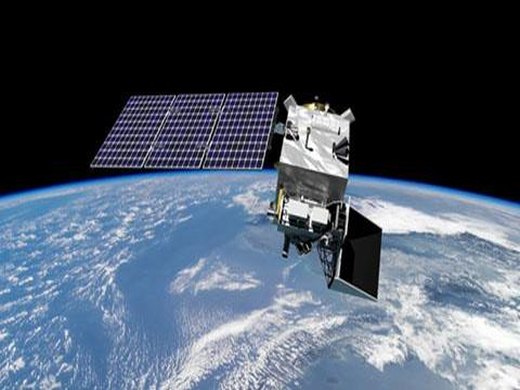 Bhatti, YA., Regayre, L., Jia, H., Watson-Parris, D., Im, U., Schutgens, N., Nenes, A., van Diedenhoven, B., Zadelhoff, G., and Hasekamp, O. (2026).
Multi-satellite constraints reduce uncertainty in modeled aerosol forcing. Science Advances [in review].
Bhatti, YA., Regayre, L., Jia, H., Watson-Parris, D., Im, U., Schutgens, N., Nenes, A., van Diedenhoven, B., Zadelhoff, G., and Hasekamp, O. (2026).
Multi-satellite constraints reduce uncertainty in modeled aerosol forcing. Science Advances [in review].
- Aim: Constrain aerosol Effective Radiative Forcing (ERF) uncertainty in climate models - one of the largest remaining uncertainties in future climate projections.
- Methods: Use PACE and EarthCARE satellite observations of aerosol amount, size, absorption, and vertical distribution, together with cloud droplet number concentration, to constrain a perturbed parameter ensemble of aerosol-climate model simulations.
- Results: Combining these observations reduces aerosol ERF parametric uncertainty by 34%, narrowing the ERFari and ERFaci credible interval ranges by 66% and 32% respectively.
- The resulting observation-consistent ERF estimate of -1.52 W/m² [-2.0 to -1.1 W/m²] suggests stronger aerosol cooling than the current IPCC estimate of -1.3 [-2.0 to -0.6] W/m².
Research Highlights
Quantifying aerosol uncertainties using machine learning applications (perturbed parameter ensemble) to climate models
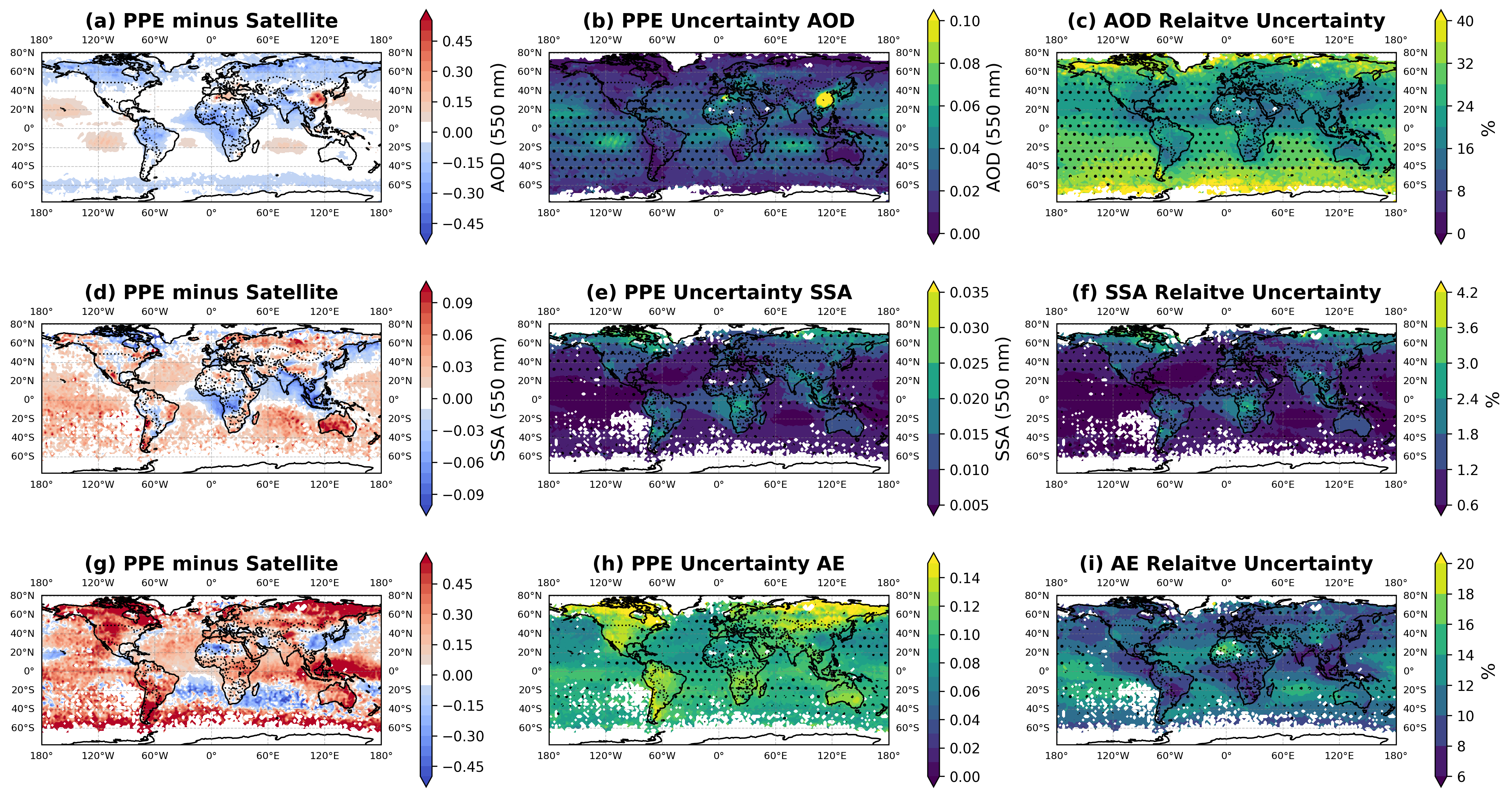
Bhatti, YA., Watson-Parris, D., Regayre, L., Jia, H., Neubauer, D., Im, U., Svenhag, C., Schutgens, N., Tsikerdekis, A., Nenes, A., Muhammed, I., van Diedenhoven, B., Arifi, A., Fu, G., Hasekamp, O. (2026). Uncertainty in aerosol effective radiative forcing from anthropogenic and natural aerosol parameters in ECHAM6.3-HAM2.3. Atmospheric Chemistry and Physics, 26(1), 269-293.
- Aim: Quantify parametric uncertainty in aerosol effective radiative forcing (ERF) from aerosol-cloud and aerosol-radiation interactions.
- Methods: Developed a perturbed parameter ensemble (PPE) of 221 simulations in ECHAM6.3-HAM2.3, varying 23 parameters controlling aerosol emissions, removal, chemistry, and microphysics.
- Results: Global uncertainty is dominated by sulfate-related processes, biomass burning, aerosol size, and natural emissions.
- Sulfate chemistry and dry deposition most strongly influence aerosol-radiation interactions, while DMS and biomass burning emissions dominate aerosol-cloud interactions.
- Comparison with POLDER-3/PARASOL satellite retrievals reveals persistent model biases in aerosol optical depth, Ångström exponent, and single-scattering albedo - sulfate-related processes alone account for over 40% of AOD uncertainty.
The sensitivity of Southern Ocean atmospheric dimethyl sulfide (DMS) to modeled oceanic DMS concentrations and emissions

Bhatti, YA., Revell, LE., Schuddeboom, AJ., McDonald, AJ., Archibald, AT., Williams, J., Venugopal, AU., Hardacre, C., Behrens, E. (2023). The sensitivity of Southern Ocean atmospheric dimethyl sulfide (DMS) to modeled oceanic DMS concentrations and emissions. Atmospheric Chemistry and Physics, 23(24), 15181-15196.
- Aim: Assess the sensitivity of atmospheric DMS to oceanic DMS datasets and transfer velocity parameterizations.
- Methods: Conducted eight 10-year simulations using UKESM1-AMIP, testing four oceanic DMS datasets and three transfer velocity parameterizations.
- Results: The choice of oceanic DMS dataset has a larger influence on atmospheric DMS than the choice of DMS transfer velocity.
- Capturing large-scale spatial variability can be more important than large-scale interannual variability.
Aerosol and Dimethyl Sulfide Sensitivity to Sulfate Chemistry Schemes
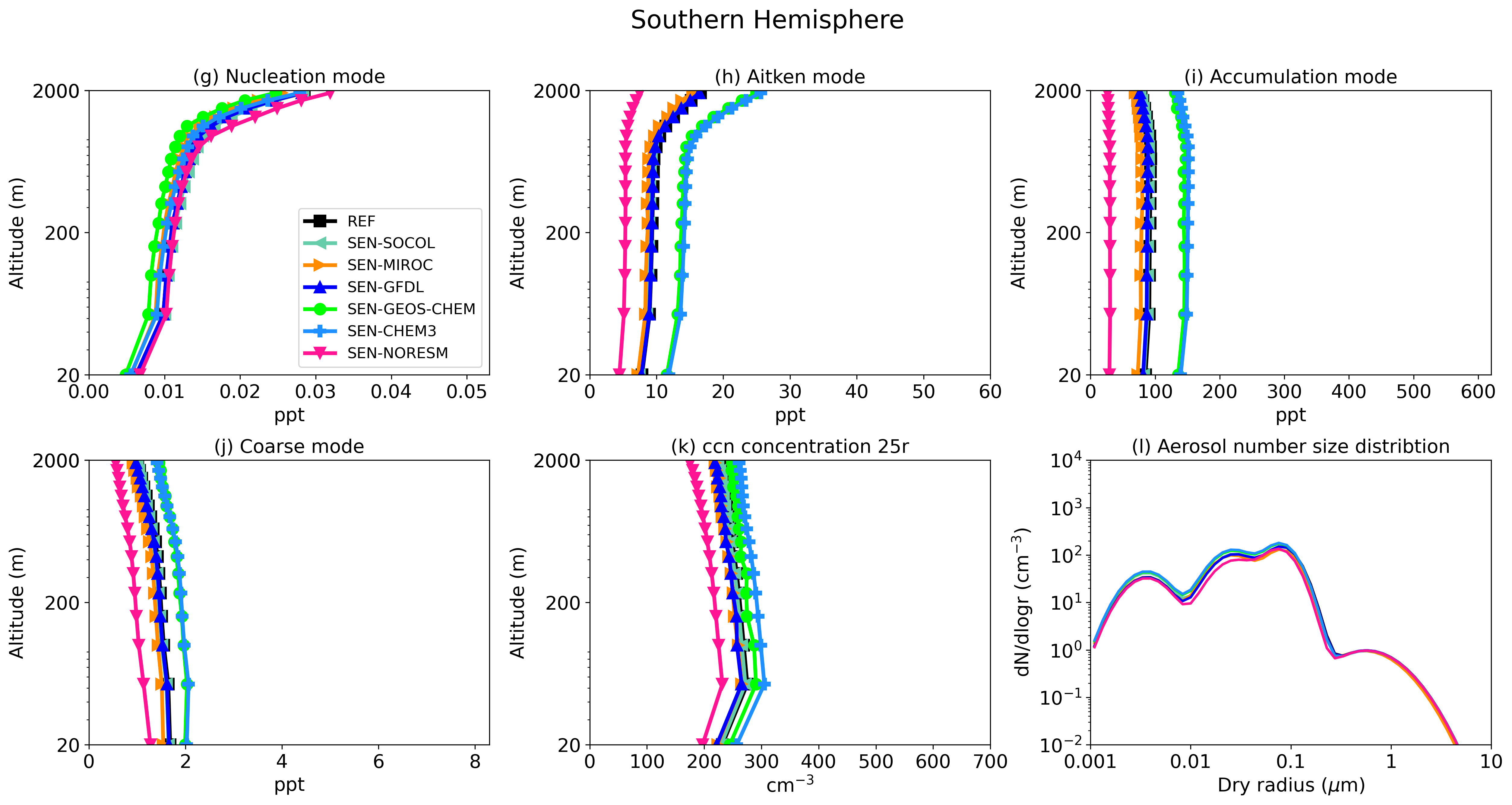
Bhatti, YA., Revell, LE., McDonald, AJ., Archibald, AT., Schuddeboom, AJ., Williams, J., Hardacre, C., Mulcahy, J., Lin, D. (2024). Aerosol and dimethyl sulfide sensitivity to sulfate chemistry schemes. Journal of Geophysical Research: Atmospheres, 129(12), e2023JD040635.
- Aim: Evaluate the sensitivity of sulfate aerosol to DMS oxidation pathways in CMIP6 models.
- Methods: Implemented seven DMS and sulfate chemistry schemes in an atmosphere-only Earth system model.
- Results: The simulated spread in aerosol optical depth and cloud droplet number concentration is more than twice as large as the change from pre-industrial to present-day.
- Constraining the chemistry of atmospheric sulfur is critical to constrain aerosol-cloud interactions.
Influences of Antarctic Ozone Depletion on Southern Ocean Aerosols
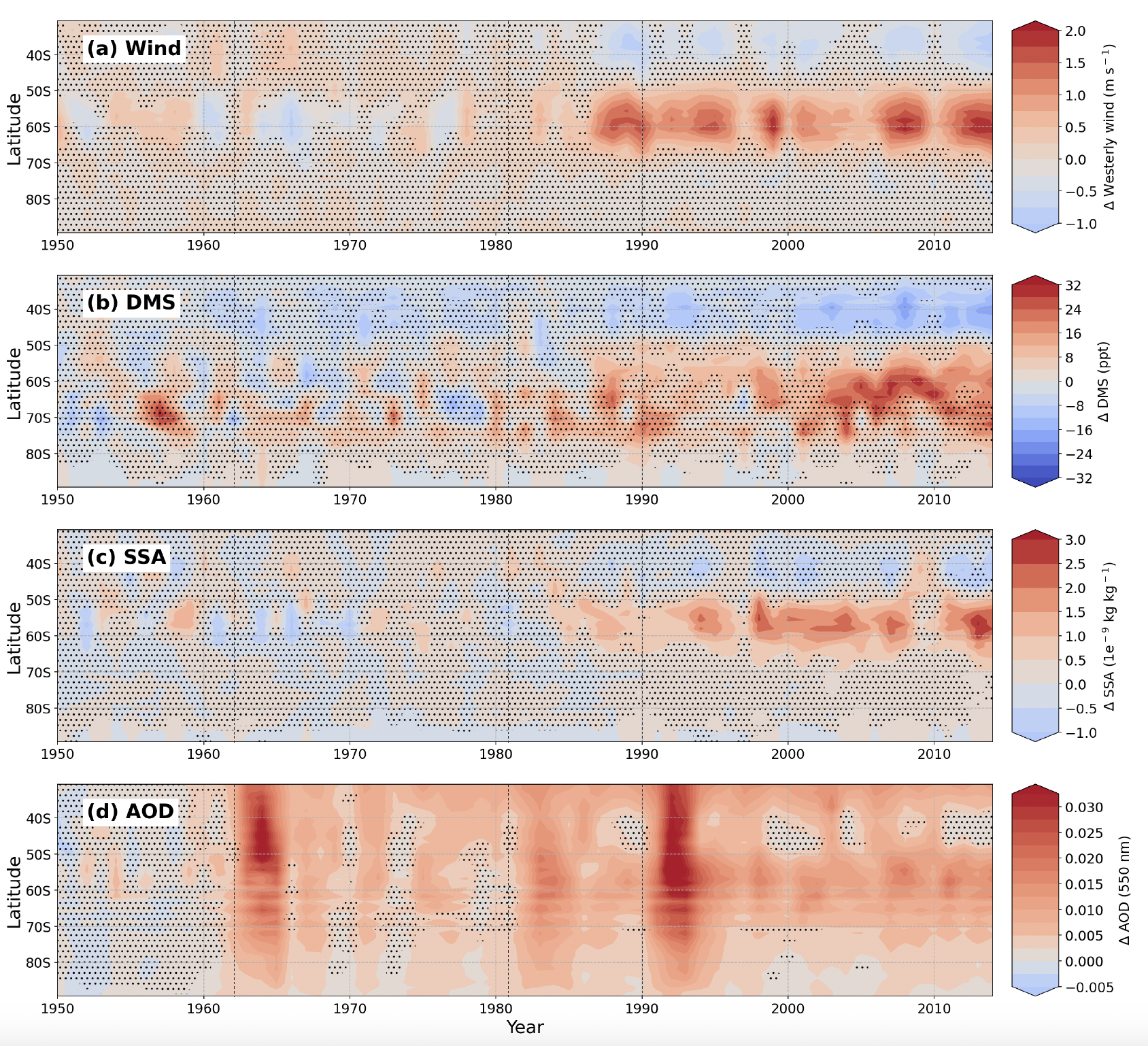
Bhatti, YA., Revell, LE., McDonald, AJ. (2022). Influences of Antarctic ozone depletion on southern ocean aerosols. Journal of Geophysical Research: Atmospheres, 127(18), e2022JD037199.
- Aim: Investigate the impact of Antarctic ozone depletion on Southern Ocean aerosols.
- Methods: Analyzed state-of-the-art Earth System Models to evaluate changes in aerosol fluxes and marine biogeochemical activity.
- Results: Indirect influences of ozone losses mean Southern Ocean aerosols cannot be considered to be representative of pristine conditions.
- Wind-driven Southern Ocean aerosol fluxes are influenced by the ozone hole during austral summer.
See my full Publications list for every peer-reviewed article, in-review manuscript, and my PhD thesis.